The Brutal Truth: Why Your Fund Manager Might Suck Compared to an AI Bot
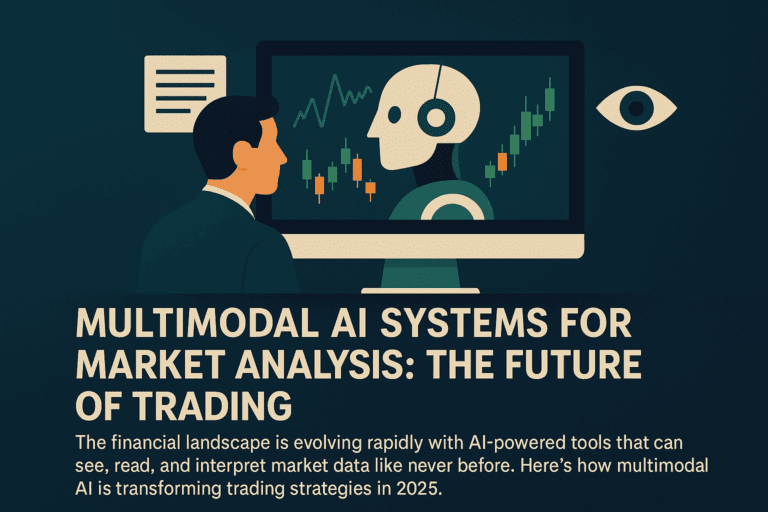
Cut the BS. Traditional fund managers are dinosaurs in a data-driven world. Discover why AI bots are leaving human investors in the dust. It’s time to face the brutal truth about your portfolio’s performance.
Let’s not mince words. You’ve entrusted your hard-earned cash, your future security, perhaps even your retirement dreams, to a human being in a fancy suit. A fund manager. Someone who promises to navigate the treacherous waters of the market, armed with experience, intuition, and a rolodex full of connections.
But here’s the brutal truth they don’t want you to hear: that human might just suck compared to an AI bot.
Yeah, I said it. While your manager is busy with quarterly reports, client lunches, and trying to predict the market based on news headlines and gut feelings, AI is processing unfathomable amounts of data, executing trades in milliseconds, and learning with every single tick of the clock. It’s not a fair fight. And you, the investor, are potentially paying the price.
The Data Deluge: Humans Drown, AI Swims
The financial markets generate data at a terrifying pace. News articles, social media sentiment, economic indicators, corporate reports, trading volumes, historical price patterns – it’s a firehose that would drown any human mind attempting to process it all in real-time.
Traditional fund managers rely on limited sources, experience-based heuristics, and maybe some basic quantitative models. They look at the surface. They can’t see the currents beneath.
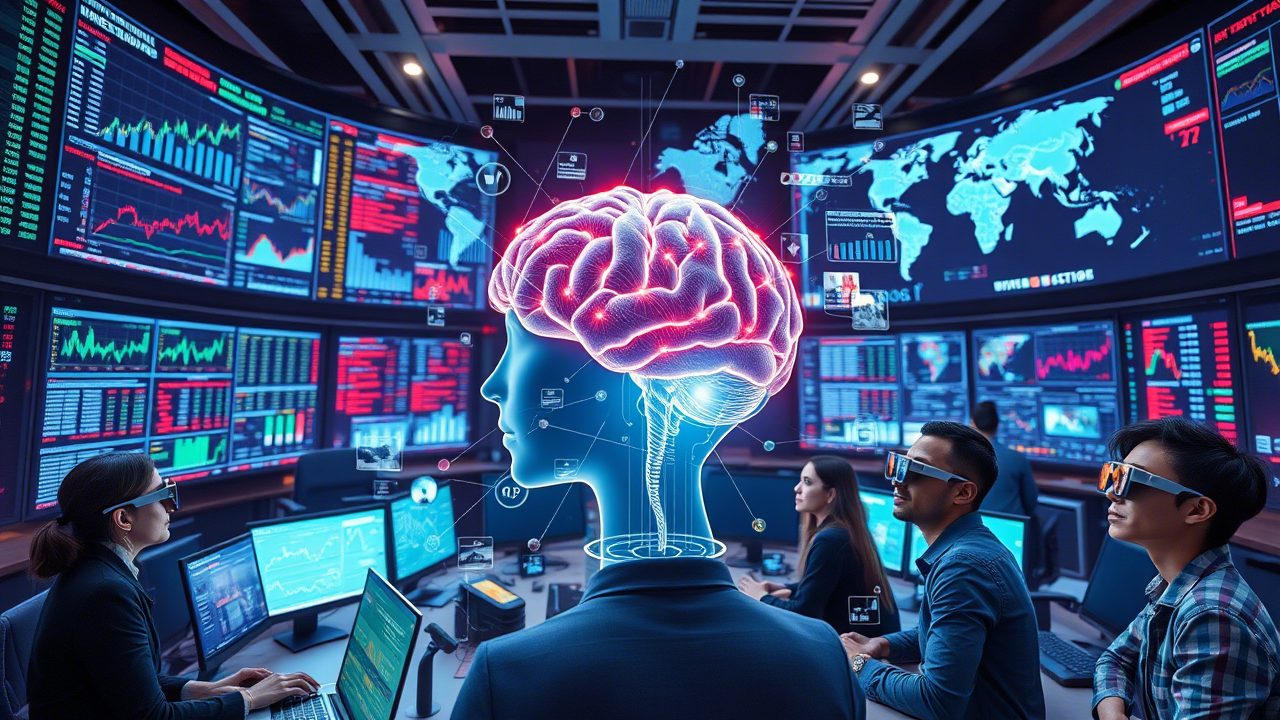
AI? It devours the firehose. Machine learning algorithms can analyze billions of data points simultaneously:
- Market Data: Price movements, volume, order books across thousands of assets.
- Economic Indicators: GDP, inflation, employment, manufacturing indices from around the globe.
- News & Sentiment: Analyzing news articles, social media trends, and earnings call transcripts for subtle shifts in mood or potential impacts.
- Fundamental Data: Balance sheets, income statements, cash flow, industry ratios for every publicly traded company.
- Alternative Data: Satellite imagery of parking lots, credit card spending trends, web search data – weird stuff that gives an edge.
An AI doesn’t get bored, it doesn’t get overwhelmed. It just processes. It finds patterns and correlations that no human, no matter how brilliant, could ever hope to spot in time to capitalize on them. Your manager is using binoculars; the AI has a satellite.
Emotional Baggage vs. Algorithmic Logic
Humans are emotional creatures. It’s part of what makes us, well, human. But it’s also our Achilles’ heel in investing. Fear makes us sell low. Greed makes us buy high or hold onto losers too long hoping for a rebound. Confirmation bias makes us seek out information that confirms our existing beliefs, ignoring contradictory evidence.
Fund managers, despite their training and discipline, are not immune. They feel the pressure from clients, the urge to chase hot stocks, the fear of missing out (FOMO), and the paralysis of indecision when markets crash.
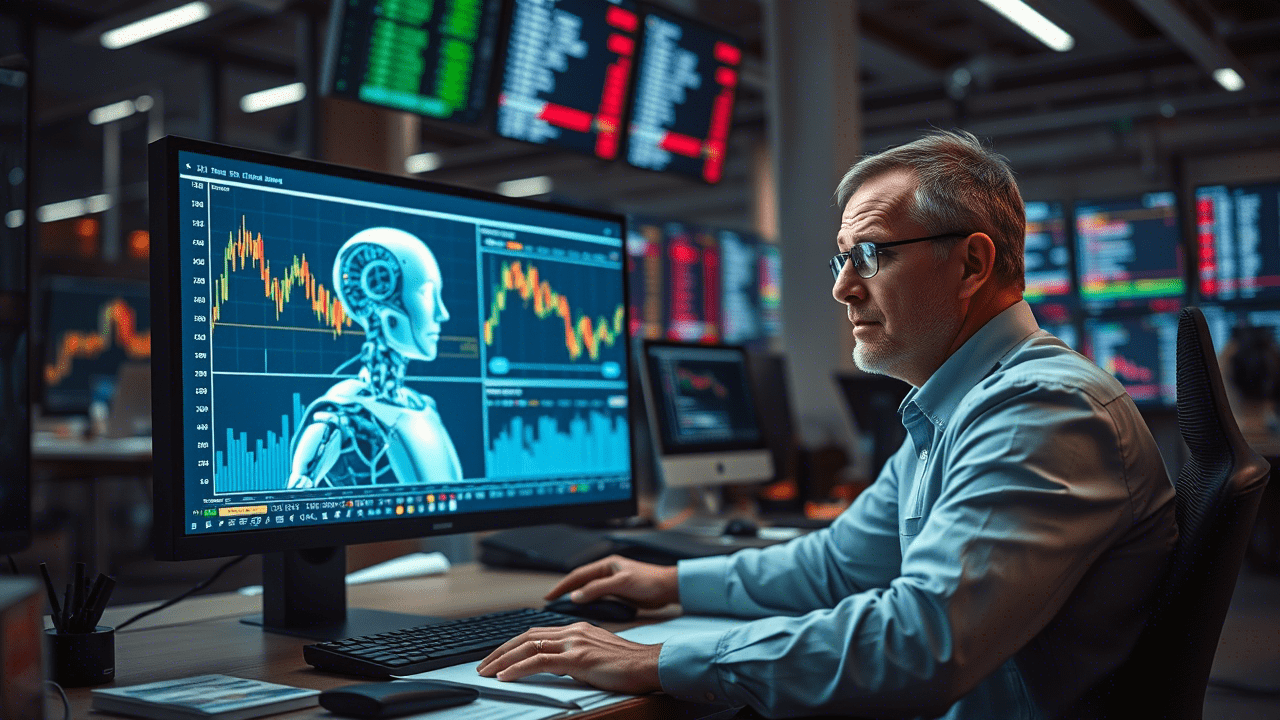
Your manager might be sweating bullets watching their portfolio bleed; an AI just sees a data anomaly to exploit or a risk threshold breached, triggering an objective action.
AI bots? They have no emotions. Zero. Zilch. They follow their programmed logic based purely on the data and the strategy they were designed for. They don’t panic sell because the news is scary. They don’t get irrationally exuberant because a stock ticker is going vertical. They stick to the plan, execute trades based on mathematical probabilities and statistical analysis, not gut feelings or CNBC talking heads.
Speed and Efficiency: Milliseconds vs. Coffee Breaks
In the world of high-frequency trading, fortunes are made and lost in the blink of an eye. Even for longer-term strategies, the speed at which information is processed and acted upon is critical. A major news event breaks, an economic report is released, or a sudden shift in market sentiment occurs – the faster you react, the better your position.
Your fund manager reads the news, thinks about it, discusses it, maybe waits for confirmation, and eventually places a trade. This process can take minutes, hours, or even days.
An AI bot, especially one operating in low-latency environments, can react to new information and execute trades in milliseconds. It can analyze the sentiment of thousands of tweets and news articles simultaneously and decide to buy or sell before your manager has even finished their morning coffee.
This isn’t just about high-frequency trading either. Even for long-term investing, the ability to quickly rebalance a portfolio based on shifting correlations or risk factors identified by complex models gives AI a significant edge in responsiveness and efficiency.
Cost: The Bentley vs. The High-Performance Engine
Let’s talk fees. Fund managers and the institutions they work for aren’t cheap. You’re paying for their salary, their bonus structure, the fancy office, the marketing, the sales team – the whole nine yards. Management fees can easily eat into your returns, especially in periods of low market growth.
What about AI? Once the algorithm is developed and the infrastructure is in place, the cost of *running* it is drastically lower per dollar managed. There’s no salary, no bonus demands, no expensive client dinners. Yes, there are development and maintenance costs, but these are scalable across massive amounts of capital.
This cost efficiency means that AI-driven investment products can often offer significantly lower fees than traditional actively managed funds. Lower fees mean more of the investment return stays in *your* pocket, not the manager’s.
Think of it this way: you’re paying for the entire luxury experience with a human manager. With AI, you’re just paying for the raw processing power and algorithmic intelligence. One is often a much better deal for performance.
Consistency and Scalability: One Human vs. Infinite Bots
A human fund manager has limits. They can only manage so many portfolios effectively. Their performance can vary depending on their health, focus, and workload. Their strategy might be difficult to scale precisely.
AI, on the other hand, is infinitely scalable and perfectly consistent. An algorithm can manage one portfolio or a million, applying the exact same logic, speed, and data processing power to each one simultaneously. There’s no ‘off day’ for an AI, no dip in performance due to personal stress or fatigue.
This consistency and scalability mean that AI-driven strategies can be applied broadly and reliably, offering a level of precision and performance that a lone human simply cannot match, regardless of their expertise.
Are Humans Completely Useless? (Okay, Maybe Not *Completely*)
Now, before you fire your manager on the spot, let’s inject a tiny bit of nuance (though honestly, not much). AI isn’t a magic bullet. It’s a tool. It’s only as good as the data it’s fed and the algorithms it’s programmed with.
- Black Swan Events: AI is trained on historical data. Truly unprecedented events might pose a challenge. However, humans aren’t great at predicting these either.
- Complex, Illiquid Assets: AI is best with highly structured, liquid data. Investing in a private startup or a piece of real estate still requires human judgment and negotiation (for now).
- Client Relationship: An AI bot isn’t going to hold your hand during a market downturn or explain your portfolio performance in simple, empathetic terms. Some investors value that human touch (though you have to ask yourself if the ‘touch’ is worth the performance deficit).
So, maybe humans aren’t completely useless. They might evolve into roles focused on algorithm oversight, strategy design, or client communication for the robo-advisory platforms. But the days of a single guru making all the calls behind closed doors are rapidly fading.
The Inevitable Shift
The financial industry is undergoing a massive transformation. The edge is moving from human intuition and experience to data science, machine learning, and algorithmic execution. The performance gap between traditional active management and sophisticated AI-driven strategies is likely to widen.
If your fund manager’s performance has been lackluster, or if you’re simply tired of high fees and human fallibility, it’s time to look at the alternative. The brutal truth is that while your human manager is good, AI is built to be better at the core task of finding and executing profitable trades based on vast amounts of information.
Stop settling for potentially mediocre, emotionally driven performance. The future of investing is here, and it’s powered by bots that don’t suck.
Ready to ditch the old ways? Explore AI-driven investment options today.