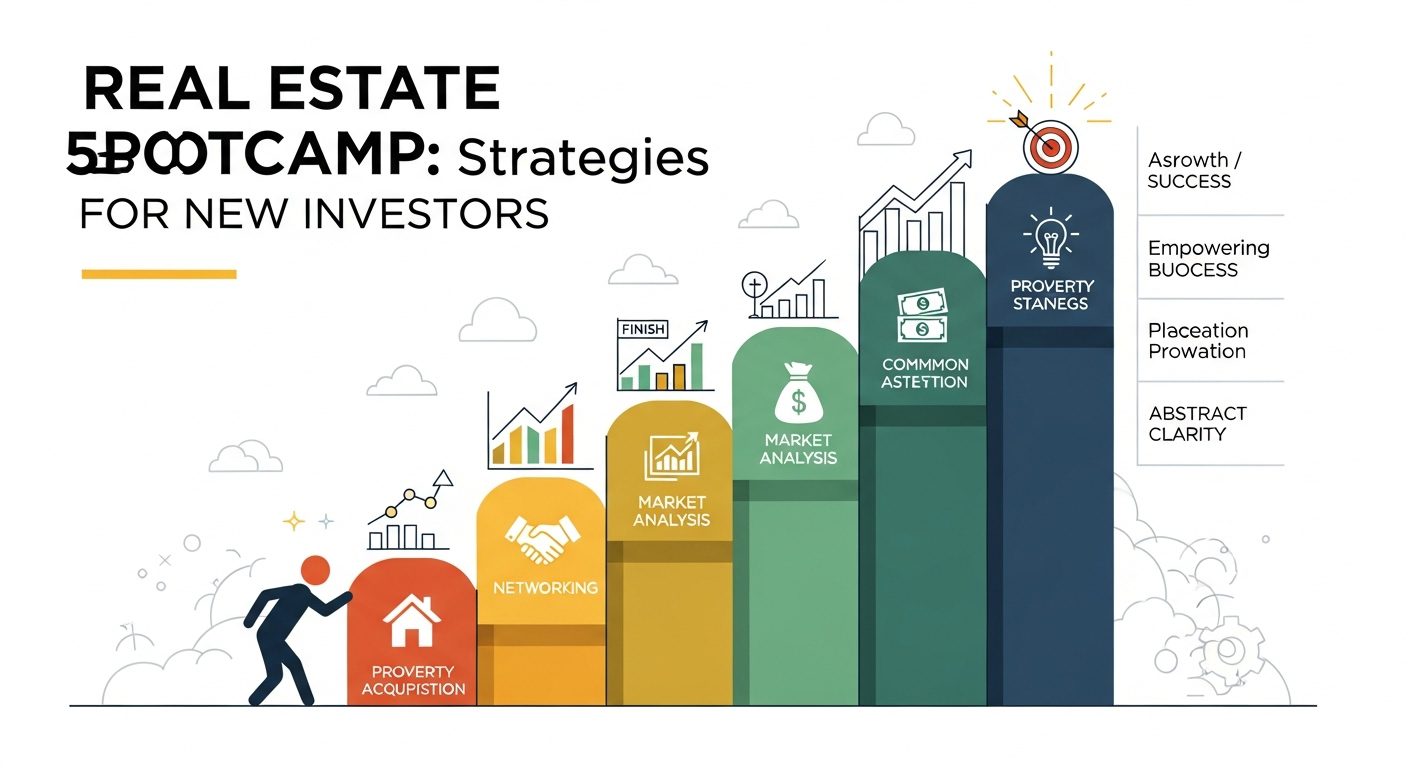
Real Estate Bootcamp: 5 Proven Strategies for New Investors
Are you dreaming of financial freedom and building lasting wealth through real estate? The world of property investment can seem daunting, a complex maze of market trends, financing options, and legal jargon. For new investors, taking that first step often feels like preparing for a marathon without knowing how to tie your shoes. But what if there was a clear, actionable path? What if you could equip yourself with proven strategies to navigate this landscape successfully? This “Real Estate Bootcamp” is designed to do just that, offering five essential strategies to transform aspiring investors into confident, capable property owners. Get ready to learn how to build a robust foundation, make informed decisions, and kickstart your journey to a prosperous real estate portfolio.
What are the most crucial initial steps for new real estate investors?
The most crucial initial steps for new real estate investors involve comprehensive education, defining a clear investment niche, securing adequate financing, conducting thorough market research, and building a strong network. These foundational elements prepare investors to make informed decisions and mitigate common risks associated with entering the real estate market, setting a solid groundwork for long-term success.
Strategy 1: The Power of Education and Niche Specialization
Jumping into real estate without a solid understanding is like sailing without a map. The first, and arguably most critical, step for any new investor is to commit to continuous education and then pinpoint a specific area of focus.
Building a Foundational Knowledge Base
Before you even think about property scouting, dedicate time to learning the fundamentals. This isn’t just about theory; it’s about understanding the practicalities that drive the market.
- Read extensively: Dive into books, blogs, and reputable financial publications. Understand real estate cycles, economic indicators, and basic property valuation methods.
- Take courses and attend seminars: Many online and local courses offer structured learning. These can cover everything from legal aspects of property ownership to advanced tax strategies.
- Understand market dynamics: Learn about supply and demand, interest rate impacts, and local economic drivers that influence property values and rental income.
Discovering Your Investment Niche
The real estate market is vast. Trying to master every segment at once is a recipe for overwhelm. Specializing allows you to develop deep expertise and identify opportunities others might miss.
Consider these common niches:
- Residential Properties: Single-family homes, duplexes, multi-family units (apartments).
- Commercial Properties: Office spaces, retail units, industrial warehouses.
- Specialized Strategies: Wholesaling, fix-and-flip, long-term buy-and-hold rentals, REITs (Real Estate Investment Trusts), land development.
Focusing on one or two niches allows you to become an expert in that specific market, understanding its unique risks and rewards. For instance, if you choose buy-and-hold residential, you’ll focus on tenant screening, property management, and cash flow analysis. [Internal Link: Guide to Real Estate Investment Niches] for more on finding your perfect fit.
Strategy 2: Financial Preparedness and Smart Financing
Real estate is a capital-intensive venture. Your financial readiness and ability to secure favorable financing are paramount to your success. This strategy focuses on getting your financial house in order and understanding your borrowing options.
Assessing Your Financial Readiness
Before approaching lenders, objectively evaluate your personal financial situation.
- Credit Score: A strong credit score (typically 720+) is crucial for favorable loan terms. Work on improving it if necessary.
- Debt-to-Income (DTI) Ratio: Lenders look at your DTI to assess your ability to manage monthly payments. Aim for a DTI below 36%.
- Savings and Down Payment: Most investment properties require a substantial down payment, often 20-25%. Ensure you have these funds readily available, plus extra for closing costs and an emergency fund for the property.
Navigating Financing Options
Understanding the various ways to fund your real estate ventures is key. Don’t limit yourself to just one type of loan.
- Conventional Loans: Offered by traditional banks, often requiring good credit and a significant down payment.
- FHA/VA Loans: While primarily for owner-occupied properties, some multi-family FHA loans can be used by owner-occupant investors. VA loans are for eligible veterans.
- Private Lenders & Hard Money: These are faster, more flexible options, but typically come with higher interest rates and shorter terms, often used for fix-and-flip projects.
- Seller Financing: Sometimes a seller is willing to finance part or all of the purchase, reducing the need for traditional bank loans.
Always get pre-approved for financing. This not only clarifies your budget but also makes your offers more attractive to sellers. Understanding the nuances of real estate financing is critical for making sound investment decisions. [External Link: Investopedia on Real Estate Financing]
Strategy 3: Masterful Market Research and Due Diligence
Location, location, location isn’t just a cliché; it’s the bedrock of real estate success. This strategy emphasizes rigorous research to find high-potential markets and meticulous due diligence on specific properties.
Unearthing High-Potential Markets
Don’t just buy where you live, buy where the numbers make sense. Research is your most powerful tool.
- Job Growth and Economic Stability: Look for areas with diverse job markets and growing industries. This attracts residents and businesses, increasing demand for housing and commercial spaces.
- Population Trends: Growing populations mean more renters and buyers. Conversely, declining populations can signal trouble.
- Rental Demand and Property Values: Analyze average rental rates, vacancy rates, and historical property appreciation in target neighborhoods.
- Local Infrastructure and Amenities: Access to good schools, public transport, parks, and retail can significantly boost property desirability and value.
The Art of Property Analysis
Once you’ve identified a promising market, the real work begins: evaluating specific properties. This involves more than just curb appeal.
- Financial Metrics: Understand and calculate metrics like Cap Rate (Capitalization Rate), Cash-on-Cash Return, and Gross Rent Multiplier (GRM) to compare potential investments.
- Thorough Inspections: Never skip a professional property inspection. It can reveal costly hidden issues like structural damage, plumbing problems, or electrical faults.
- Appraisal and Title Search: An appraisal ensures the property’s value aligns with the purchase price, while a title search confirms clear ownership and checks for any liens or encumbrances.
- Zoning and Regulations: Understand local zoning laws, building codes, and any restrictions that might impact your plans for the property. [Internal Link: Advanced Property Analysis Techniques]
Strategy 4: The Indispensable Role of Networking and Mentorship
Real estate is a team sport. No investor, no matter how skilled, succeeds in isolation. Building a robust network and seeking guidance from experienced mentors can accelerate your learning curve and open doors to opportunities.
Building Your A-Team
Surround yourself with professionals who can provide expertise and support.
- Real Estate Agents/Brokers: Find investor-friendly agents who understand your goals and can identify suitable properties.
- Contractors and Handymen: Essential for renovations, repairs, and ongoing maintenance.
- Attorneys: For legal advice, contract review, and closing processes.
- Accountants/Tax Advisors: To optimize your tax strategy and ensure compliance.
- Loan Officers/Brokers: To help you navigate financing options and secure the best rates.
- Property Managers: If you plan to be a passive investor, a good property manager is invaluable for tenant relations and maintenance.
Seeking Mentorship and Community
Learning from those who have already walked the path you’re on can save you time, money, and costly mistakes.
- Local Investor Meetups: Attend local real estate investment groups (REIAs). These are excellent places to network, learn from presentations, and find potential partners.
- Online Forums and Communities: Engage with online groups where experienced investors share insights and answer questions.
- Find a Mentor: Actively seek out experienced investors willing to share their knowledge. A mentor can offer personalized advice, guidance, and accountability. [External Link: Harvard Business Review on Mentorship]
Strategy 5: Prudent Risk Management and a Long-Term Vision
Real estate investing, like any investment, carries risks. A successful investor understands these risks, implements strategies to mitigate them, and maintains a long-term perspective. Patience and resilience are your greatest assets.
Identifying and Mitigating Risks
Proactive risk management protects your investment and ensures stability.
- Vacancy: Always factor in potential periods where your property might be empty. Maintain a vacancy reserve fund.
- Maintenance and Repairs: Unexpected repairs can quickly eat into profits. Budget for regular maintenance and set aside a contingency fund for emergencies.
- Market Downturns: Real estate markets fluctuate. Be prepared for potential dips in property values or rental income.
- Legal and Tenant Issues: Understand landlord-tenant laws. Have clear lease agreements and be prepared to handle tenant disputes professionally.
- Insurance: Adequate property insurance is non-negotiable. Consider landlord insurance, flood insurance, and umbrella policies.
Cultivating a Long-Term Mindset
Real estate is rarely a get-rich-quick scheme. Sustainable wealth is built over time through consistent effort and strategic decisions.
- Patience is Key: Property values appreciate, and equity builds over years, not months. Avoid emotional decisions driven by short-term market noise.
- Compounding Returns: Reinvesting rental income or profits from one property into another can significantly accelerate your portfolio growth.
- Focus on Appreciation and Cash Flow: Understand the balance between these two. Some properties offer strong cash flow, while others are primarily for long-term appreciation. Your strategy should dictate your focus. [External Link: Morningstar on Long-Term Investing]
Conclusion: Your Real Estate Journey Starts Now
Embarking on your real estate investment journey is an exciting venture filled with immense potential. By embracing these five proven strategies – committing to education and specialization, ensuring financial preparedness, mastering market research and due diligence, building a strong network, and maintaining a long-term, risk-aware vision – you are not just hoping for success; you are strategically building it. Remember, every seasoned investor started exactly where you are now. The difference lies in taking action, learning from every step, and consistently applying these principles. The real estate market awaits your educated and confident entry. What’s your first step going to be? Start your bootcamp today and turn your investment dreams into tangible realities.