Proven Strategies to Build and Sustain a Strong Investment Portfolio
Your Investment Portfolio: A Living, Thriving Asset 💰🌱
Your investment portfolio is like a living organism—it requires attention, balance, and occasional adjustments to thrive. Building a strong foundation while staying adaptable is the key to long-term financial success. Here are 10 strategies to guide you:
1. Define Your Financial Goals and Time Horizon 🎯⏳
Every portfolio starts with a clear purpose. Ask yourself:
- Are you investing for retirement? 🏖️
- Saving for a major purchase like a home? 🏡
- Looking for short-term income? 💵
Your goals will shape your time horizon and investment strategy. For instance, long-term investors might lean into growth-oriented assets, while short-term goals may prioritize liquidity and stability.
💡 Pro Tip: Break your goals into buckets—short, medium, and long-term. Assign each bucket its own timeline and investment strategy.
2. Know Your Risk Tolerance ⚖️📉
Understanding how much risk you can handle is crucial. Ask yourself:
- How would you feel if the market dropped 20% tomorrow? 😨
- Do you prefer steady, predictable returns or higher-risk opportunities with bigger rewards? 🚀
A well-balanced portfolio reflects both your financial goals and emotional readiness for market fluctuations.
💡 Pro Tip: If you’re unsure, think back to the last market downturn—how did you react? That insight can help determine your true risk tolerance.
3. Diversify to Protect Your Portfolio 🛡️📊
Ever heard the phrase, “Don’t put all your eggs in one basket”? Diversification spreads risk by including a mix of:
- 📈 Stocks for growth potential
- 💵 Bonds for stability and income
- 🏠 Real estate & commodities to hedge against market volatility
A well-diversified portfolio ensures that a dip in one sector doesn’t derail your entire investment plan.
💡 Pro Tip: Diversification isn’t just about owning many investments—it’s about owning different kinds of investments.
4. Master Asset Allocation 🏗️📊
Your mix of stocks, bonds, and other assets should be tailored to your goals, risk tolerance, and time horizon.
- Younger investors 📅 may opt for a higher allocation to stocks for growth
- Closer to retirement? Shifting to more conservative investments (like bonds) can preserve capital
💡 Pro Tip: Use the “Rule of 100”—subtract your age from 100 to determine your ideal stock allocation. (If you’re 40, hold 60% stocks, 40% bonds).
5. Build a Core Portfolio and Add Satellite Investments 🏛️🚀
A core-satellite strategy blends stability with high-growth opportunities:
✅ Core – Low-cost index funds & ETFs form the stable foundation
🚀 Satellites – Targeted investments (like emerging markets or tech stocks) for extra growth
💡 Pro Tip: Keep satellite investments to 20% or less of your portfolio.
6. Rebalance Regularly 🔄📊
Over time, your portfolio can drift from your target allocation.
✅ Set a schedule (quarterly or annually) to review your investments
✅ Sell assets that have grown beyond your target allocation
✅ Buy those that have lagged behind
💡 Pro Tip: Automate rebalancing if your brokerage allows it—many retirement accounts and robo-advisors offer this feature.
7. Keep Costs in Check 💰❌
High fees erode returns over time. Here’s how to avoid them:
✅ Choose low-cost index funds or ETFs
✅ Compare expense ratios & management fees
✅ Avoid excessive trading fees & commissions
💡 Pro Tip: A 1% reduction in annual fees could result in 20% more in your portfolio after 30 years!
8. Stay Informed—But Avoid Overreacting 📰🤯
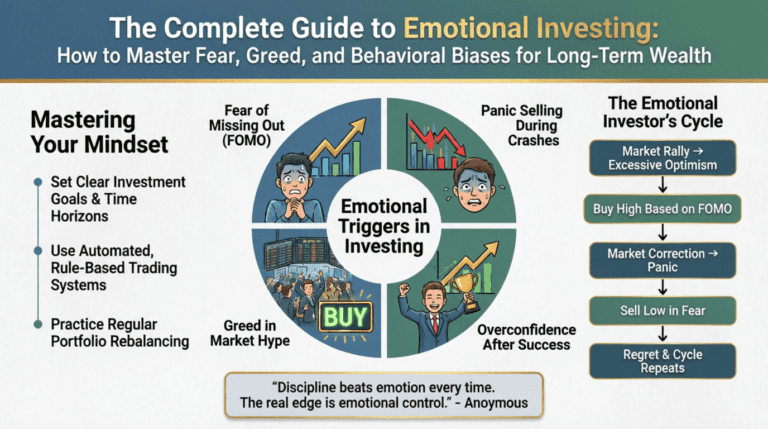
Markets fluctuate, and headlines can be alarming. A steady, disciplined approach ensures you don’t make emotion-driven mistakes.
💡 Pro Tip: Limit how often you check your portfolio—once a month or quarter is enough!
9. Adjust for Major Life Changes 🔄💡
Your portfolio should evolve as your life changes. Consider adjusting your strategy when:
- Your income changes significantly 💵
- You start or grow a family 👨👩👧👦
- Retirement is approaching 🏖️
💡 Pro Tip: Schedule a portfolio review during major life milestones to stay aligned with your goals.
10. Seek Professional Guidance 🤝📊
Even experienced investors benefit from a second opinion. A Certified Financial Planner (CFP) can:
✅ Clarify your goals
✅ Offer objective advice tailored to you
✅ Help navigate complex financial decisions
💡 Pro Tip: Think of a CFP as a financial coach—their role is to keep you on track, not just “beat the market.”
🔑 Key Takeaways
Maintaining a healthy investment portfolio requires:
✔️ Clear goals 🎯
✔️ Smart diversification 📊
✔️ Regular rebalancing 🔄
✔️ Low fees 💰
✔️ Adapting to life changes 🔄
By staying disciplined and informed, you can grow and protect your investments for the long haul. 🚀💰